

Leakage Prevention in Building Structures
Common Leakage Problems
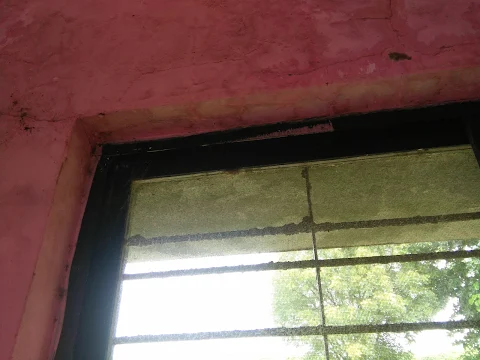
Leaking terraces, leaking toilets, damp walls, wet patches underside the slabs, peeling of plaster and paints, fungus growth is very common in buildings now-a-days. If a close look is taken, one will come to know that the cause of all these defects is either rain water or domestic water used by the occupants seeping through the structure. These defects do not render the building totally useless for occupation. However, one will agree that such defects are very irksome so profusely that occupants cannot find inch of a place to sit or lie down during monsoon. There are few examples where occupants sometimes have to use umbrella or polythene sheet while using the toilet. These toilet blocks leak through out the day whether the toilet above is being used or otherwise. Damp spots on the walls results in peeling off plaster decolouration and fungus growth.


Terrace Slab
Leakages through terrace slabs generally occur due to following reasons:
Concrete slab is not cast properly and provided with appropriate slope.
It is a truth that the best way to fight with water is to give way. By only this means, one can win over this strong element of nature. If slab is not laid to proper slope, water stagnates over the slab and in due course it finds way into the crevices and seeps into the structure. At the time of laying concrete, if proper care is not taken, it can result honeycombed concrete. It further leads to voids in the structure and subsequently serves as storage reservoirs and path of seepage gets established.
Concrete being heterogeneous material, it cannot be watertight. This belief is half truth. Even though concrete is heterogeneous material, if proper care is taken, it can become watertight. If terrace slab is cast with the proper measures by:
- controlling the mix properly,
- controlling water cement ratio and slump,
- vibrating and placing the concrete,
- correctly maintaining the top profile the slab,
any of the defects highlighted can be avoided.
It is observed that generally masonry parapet walls are provided over flat terrace slab most of the buildings.


It is experienced that the terraces are hardly used and it remains as a show piece only. So only for the sake of show, concrete slab for terrace are laid without slope. Masonry parapets further aggravate the problem.
Terrace slab in combination with parapet wall compounds large quantity of water. If no proper drains are thought of during construction, it results in ponding water over the terrace and the structure is subjected to leaking. There are some buildings which leak even after the stoppage of monsoon for substantial period. This leakage is due to the stagnation of water over the terrace and moisture held in the slab. Terraces are also used for keeping overhead water tanks. The leakages through these overhead water tanks also cause stagnation of water on the terrace which give constant trouble.


If proper layout for store water is prepared at the time of planning only, some of these problems can be avoided.
It is experienced that in case of combination of terrace slab and parapet type construction, no proper thought is given to make parapet walls damp proof and non porous. The R.C.C. column extensions for future expansion are many times concreted with lean concrete such as 1:3:6, 1:4:8.
No doubt, this may facilitate easy breaking of concrete at latter stage. However, for the present stage, it creates a source of constant trouble. Parapet walls are also constructed without proper care as they are not load bearing and contain lot of voids. No proper care is also taken to keep away the water falling on the top of parapet.
If we look back in the past, it is observed that proper designs of parapet were used to be adopted. The coping on top of parapet was provided with drip. This coping prevented water passing continuously over the parapet walls. Now-a-days simple plastering is done on the top of parapet walls which generally becomes a great source of dampness in the buildings. There is also lack of attention while making the junction of slabs and parapet wall. In the past, lead flashing was used to be provided at this junction. This lead flashing used to protect this joint and used to avoid dampness and leakages in the walls.
In terrace slab and parapet wall type construction, terrace slab is cast flush with the outer face of the structure. Water falling on this slab finds its way through the junction and through cracks between the masonry wall and slab. In spite of proper design of the slab, some structural deflection is going to take place in the slab. This deflection and subsequent rotation of the slab at the ends create a hair crack on the outer face of the wall below the slab. This crack leads to water seepage in the structure. Many of us do not think that this is also a major source of dampness. If this defect is to be countered, best way is to provide a projected slab at least 25 cm to 30 cm all round the buildings. This will ensure that water falls clear off the structure and the rotation crack is well protected by the projection.
In combination of terrace slab parapet wall type construction, storm water is required to be taken down through water pipe and down take pipes. In present day frame structures, such down take pipes are taken along the columns for obvious reasons. Many a times these columns are cast upto top of parapet either for future expansion or for architectural appearance. However, those columns pose a problem of outlet arrangement. Generally, 90° bend and a 45° 'y' type bend are required to be introduced. Such bends are difficult to make them water tight and subsequently during maintenance they are difficult to maintain. Because of two curvatures they cannot be cleaned properly, and also cannot be clearly seen whether they are blocked or otherwise. A correct method is to provide a down take pipe which goes straight in the slab without bends. This can only be achieved by projecting the slab outside the face of the building and taking down take pipes in such fashion. It is also noticed many a times that water spouts are not provided at the level at which they should have been provided. It is noticed that the invert level of the water spouts is many times higher by few inches than the finished terrace slab. Thus, water spout do not function sometimes and the water below the invert level remain stagnated on the terrace. If these levels are properly adjusted and the invert level is sunk down sufficiently, it will ensure full drainage of the terrace.
In load bearing structures of old type, slab is not provided with full bearing and it rests on half bearing only. In such cases one more source of the leakage is joint between vertical face of the slab & the masonry. If this is not properly attended to this joint gives trouble. Best way to deal with such cases is to provide proper water proof terrace parapet and lead flashing junction.



In case of buildings provided with corridor slabs at different levels than the terrace slab or pitched roof, no sufficient slope is provided to the verandah slab for the obvious reasons of appearance. If at all, proper slope cannot be provided to such slab, at least properly laid out coba needs to be provided on top of these slab so that water does not remain stagnant on it. Stagnated water find a way through the slab as well as through the interior wall junctions. Best way to avoid such situation is either to provide proper slope to verandah slab or to provide well laid water proof course with proper slopes away from the wall having proper rounding at the junction of the internal wall and verandah slab. It is a good practice to provide a small inverted beam bend at the junction of internal wall and the verandah slab. This inverted bend raises the ingress of water to a great extent and many problems can be avoided by this type of construction.


Leakages through Water Closet (W.C.)
Leakages through W.C. are mainly through the following:
- Junction of W.C. pan and the trap.
- Junction of the W.C. trap and the outlet pipe going through the wall.
- Junction of lead flashing and the W.C. pan.
- Joints in the floor slab, floor finish and the pan, floor finish and the walls
- Joint between the wall piece and the right angle bend introduced in the wall
- Through the 'y' Junction.
Toilet Slab
If we know the anatomy of the plumbing connection in the W.C. block, we will see that there are lot of thematic joints in this construction. It will also make us aware of the importance of right workmanship in this field. It is common observation that many times this job is left to the entire whim of the plumber and no Engineer cares for in toilet block. It may be due to rush at the end of the work or even due to the apathy of an engineering about this Job.
It is generally thought unimportant and non engineering aspect of the building. However, if we look from the angle of the user, it is very important from his point of view. If proper care and scientific approach is taken during construction and installation of the W.C. blocks, much of the troubles can be avoided. Now-a-days sunken slab and sloping slabs are generally provided for the W.C. blocks. However, no care about the proper concreting such as mix and water cement ratio and slump is taken. This sunken slab concrete becomes porous than the other slabs in the building because of its crooked shape and difficult access, no proper thought is given to this portion of the concrete. Now a days it is practice amongst the engineers to provide Inverted beam at the outer face of the building to accommodate the sunken or sloping W.C. slab.

1 Comments
Need a light yet durable plastic sheet? A 300 micron HDPE sheet from Singhal Global is perfect for agricultural covers, packaging, and light-duty industrial applications.
ReplyDeleteIf you have any doubts, suggestions , corrections etc. let me know